UK MHRA Guidance: Access, New Active Substance and Biosimilar Work Sharing Initiatives

Timely access to innovative medicines and biosimilars is an important objective for regulatory authorities worldwide. Collaborative assessment models enable regulators to share scientific expertise, reduce duplication of effort, and accelerate the availability of high-quality, safe, and effective medicines for patients. International work-sharing initiatives also promote regulatory convergence while maintaining robust scientific evaluation standards.
The Medicines and Healthcare products Regulatory Agency (MHRA) has published the Access, New Active Substance (NAS) and Biosimilar Work Sharing Initiatives guidance to explain how applicants can participate in collaborative assessment pathways for new active substances and biosimilars. The guidance outlines eligibility criteria, application procedures, assessment processes, participating regulatory authorities, timelines, and the list of products approved through these work-sharing initiatives.
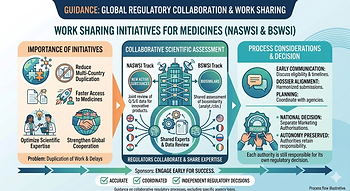
Why This Guidance Is Important
Developing innovative medicines and biosimilars often requires significant regulatory resources across multiple countries. Conducting independent assessments for the same product can lead to duplication of work and delays in patient access.
The NAS Work Sharing Initiative (NASWSI) and Biosimilar Work Sharing Initiative (BSWSI) enable participating regulatory authorities to collaborate during scientific assessment. In contrast, each authority retains responsibility for its own regulatory decision. This approach supports faster access to medicines, strengthens regulatory cooperation, and improves the efficient use of scientific expertise.
New Active Substance Work Sharing Initiative (NASWSI)
The New Active Substance Work Sharing Initiative is designed to facilitate the collaborative assessment of marketing authorisation applications for innovative medicines containing new active substances.
Under this initiative, participating regulatory authorities jointly review scientific data relating to the quality, safety, and efficacy of eligible products. The collaborative assessment helps reduce duplication while allowing each authority to make an independent decision based on its own regulatory framework and national legislation.
Applicants interested in participating should engage with the relevant regulatory authorities early in the development process to determine eligibility and coordinate submission timelines.
Biosimilar Work Sharing Initiative (BSWSI)
The Biosimilar Work Sharing Initiative applies similar collaborative principles to biosimilar medicines.
The initiative enables participating regulators to share scientific assessments of biosimilar applications, including quality, analytical comparability, non-clinical, and clinical evidence demonstrating biosimilarity to the reference product. By coordinating regulatory reviews, the initiative supports efficient assessment while maintaining the scientific standards required for biosimilar approval.
Participation in the initiative does not replace national regulatory requirements, and each authority continues to issue its own marketing authorisation following completion of the assessment.
Eligibility and Participation
The guidance describes the eligibility criteria that applicants should consider before requesting participation in either work-sharing initiative. Applications are generally expected to involve products intended for simultaneous or closely aligned submissions to participating regulatory authorities. Sponsors should ensure that application dossiers are sufficiently harmonised to support collaborative assessment and should discuss participation with the relevant agencies before submission.
Early engagement allows regulators to determine whether the product is suitable for work sharing and facilitates planning of assessment activities.
Assessment Process
The work-sharing initiatives involve coordinated scientific evaluation by participating regulatory authorities throughout the assessment process. Authorities collaborate by reviewing submitted data, sharing scientific expertise, discussing assessment findings, and preparing coordinated assessment reports where appropriate. Despite this collaborative approach, each participating authority independently evaluates the evidence and reaches its own regulatory decision regarding product approval.
This model preserves national regulatory autonomy while improving assessment efficiency and reducing duplication of scientific review.
Participating Regulatory Authorities
The guidance identifies the regulatory authorities participating in the work-sharing initiatives and explains that collaboration may continue to expand as additional agencies join the programme.
Participating authorities work together throughout the scientific assessment while maintaining responsibility for decisions within their own jurisdictions. Applicants should confirm the current list of participating authorities before preparing submissions under either initiative.
Application Process
Applicants wishing to participate in the NASWSI or BSWSI should notify the participating regulatory authorities in advance of their planned submission.
The guidance recommends early communication to discuss eligibility, anticipated submission dates, regulatory timelines, and dossier readiness. Marketing authorisation applications should be prepared according to the individual requirements of each participating authority while supporting collaborative scientific review through aligned submission content.
By enabling participating regulatory authorities to share expertise while retaining independent regulatory decision-making, the NASWSI and BSWSI support efficient medicine evaluation, reduce duplication of effort, and facilitate timely patient access to high-quality medicines. Early engagement, harmonised submissions, and adherence to initiative requirements remain essential for successful participation.
References
For completed details, refer to Access, New Active Substance (NAS), and Biosimilar Work Sharing Initiatives


Comments