UK MHRA Guidance: Medicines Packaging, Labelling, Patient Information Leaflets and Guidance on How to Submit Changes to Labels & PILs as a Self-Certification

Medicines packaging, labelling, and Patient Information Leaflets (PILs) are essential components of medicine safety and regulatory compliance. They provide healthcare professionals and patients with critical information regarding the safe use, storage, administration, and identification of medicinal products. Throughout a medicine's lifecycle, these materials must remain accurate, up to date, and consistent with the approved product information to support patient safety and reduce the risk of medication errors.
To help Marketing Authorisation Holders (MAHs) meet these obligations, the Medicines and Healthcare products Regulatory Agency (MHRA) has published two complementary guidances.
Medicines Packaging, Labelling and Patient Information Leaflets and Self-Certification for Changes to Labels and Patient Information Leaflets.
The first establishes the regulatory requirements for medicines packaging, labelling, and patient information leaflets, while the second explains how eligible changes to labels and PILs can be submitted through a self-certification process instead of a full regulatory assessment.

Why This Guidance Is Important
Packaging and labelling are more than regulatory requirements—they are essential tools for communicating critical information about medicines. Well-designed labels and patient information leaflets help patients use medicines correctly, enable healthcare professionals to identify products accurately, and ensure that important warnings, dosage instructions, storage conditions, and safety precautions are clearly presented.
The MHRA guidance establishes standards for packaging design, labelling content, patient information leaflets, accessibility requirements, and regulatory submissions, ensuring that medicine information remains accurate, consistent, and easy to understand throughout the product lifecycle.
Packaging, Labelling and Patient Information Requirements
Medicine packaging should protect the product while presenting mandatory information in a clear and legible format. Labels should include essential product details such as the medicine name, strength, pharmaceutical form, storage instructions, expiry date, batch number, and other statutory information required under UK legislation.
Patient Information Leaflets should provide patients with easy-to-understand information covering the medicine's purpose, dosage instructions, precautions, contraindications, possible side effects, storage recommendations, and guidance on reporting adverse reactions. The leaflet should accurately reflect the approved Summary of Product Characteristics (SmPC) while using a layout that enables patients to locate important information quickly.
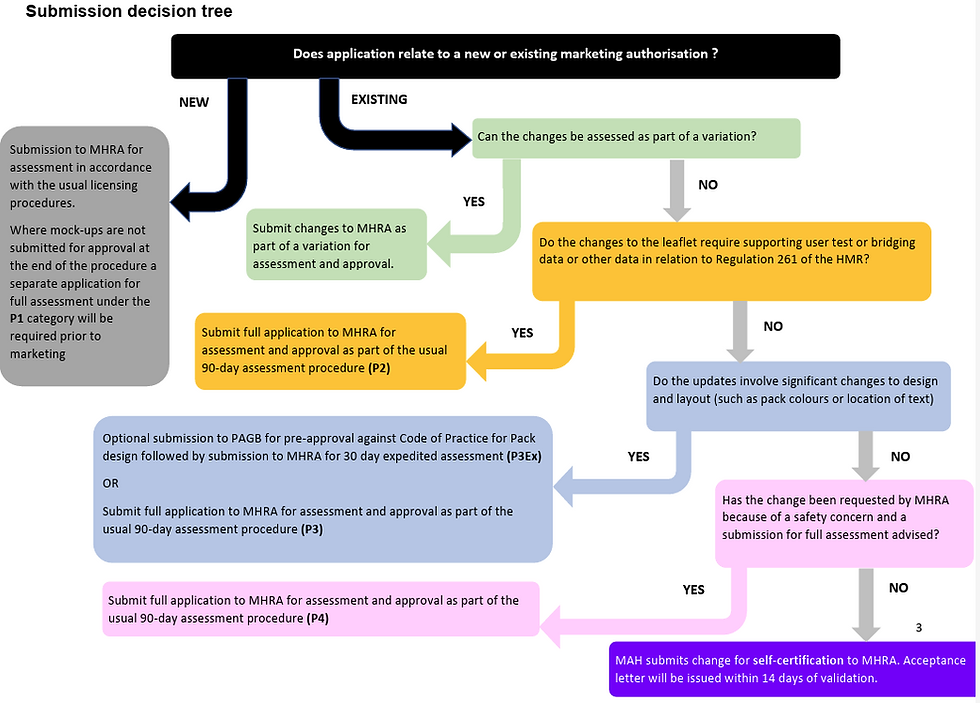
The guidance also highlights the importance of incorporating mandatory safety warnings, Braille on outer packaging where applicable, and child-resistant packaging for medicines that require additional protection. When significant updates to packaging or patient information are proposed, manufacturers may need to submit revised artwork for full regulatory assessment to ensure continued compliance with UK medicines legislation.
By maintaining accurate packaging and patient information throughout a product's lifecycle, Marketing Authorisation Holders help improve patient understanding, reduce medication errors, and support the safe use of medicines.
Purpose of the Self-Certification Process
As authorised medicines evolve, manufacturers often need to make routine updates to packaging artwork and Patient Information Leaflets. Many of these changes are administrative or minor in nature and do not affect the approved Summary of Product Characteristics or alter the safe use of the medicine.
To simplify the regulatory process for these lower-risk updates, the MHRA introduced the self-certification procedure. This pathway allows eligible changes to be registered efficiently while ensuring that significant modifications affecting patient safety, readability, or medicine identification continue to undergo a full regulatory assessment.
When Self-Certification Can Be Used


Comments